
Inside a JSA report
Lead clearance
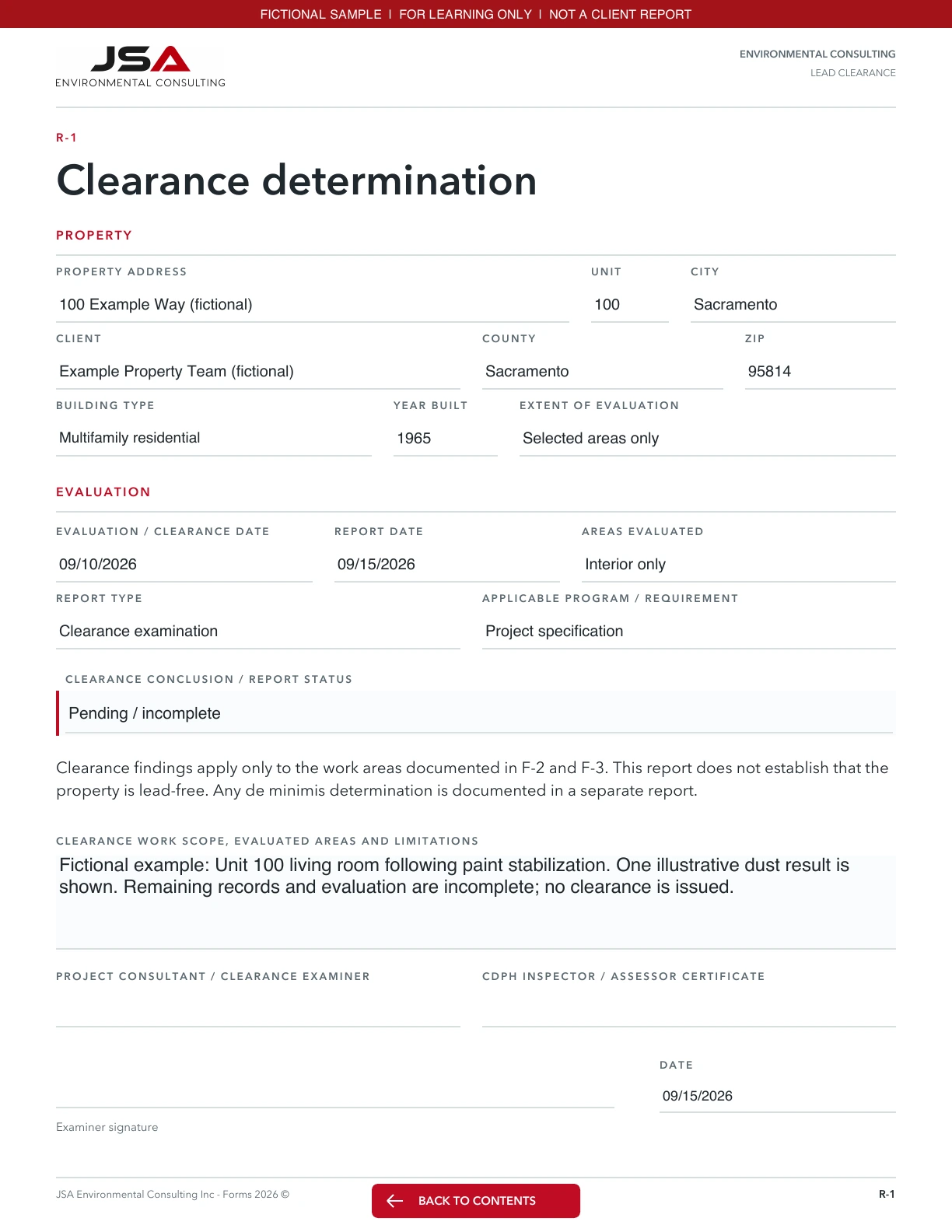
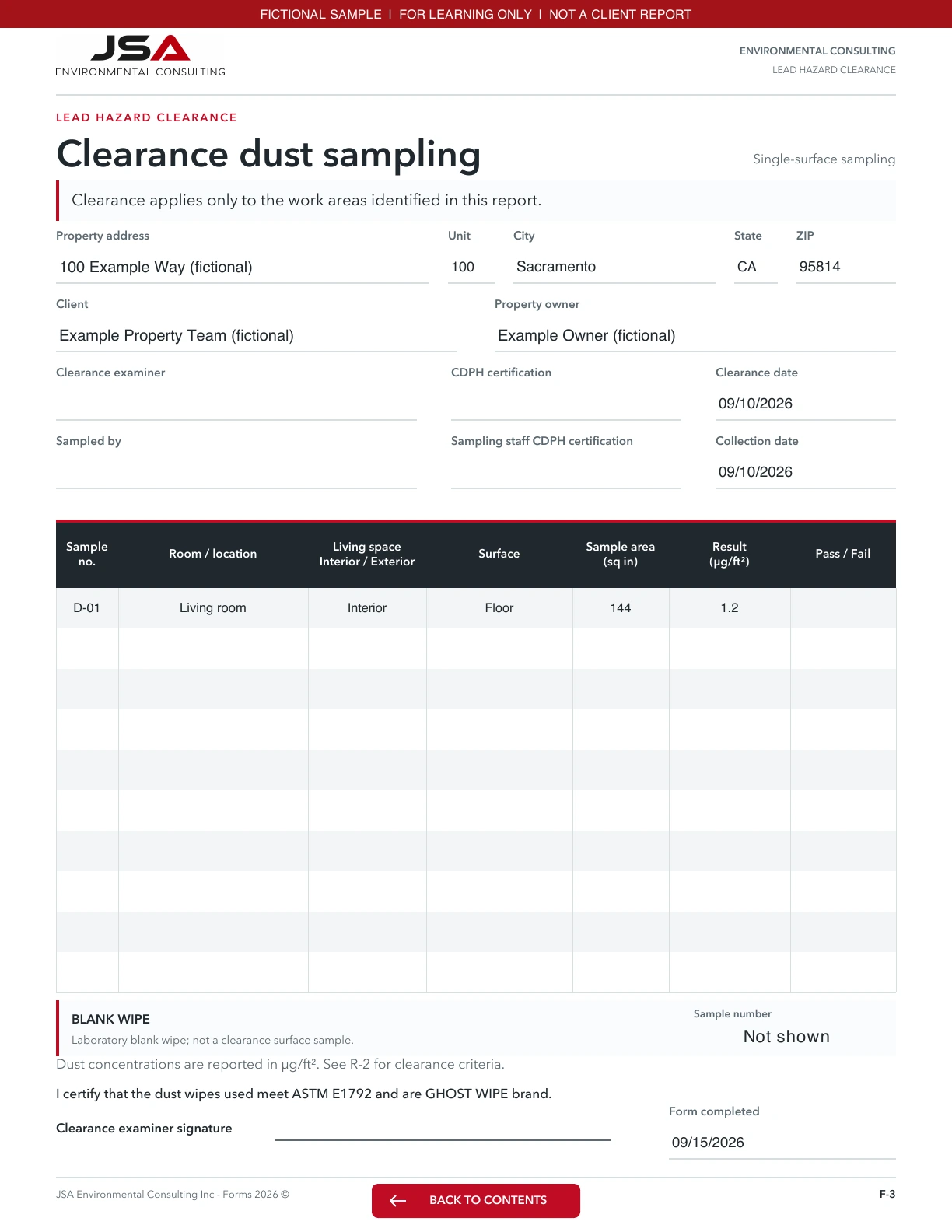
Locate the documented work area, report status, and dust-sample result in a JSA clearance report.
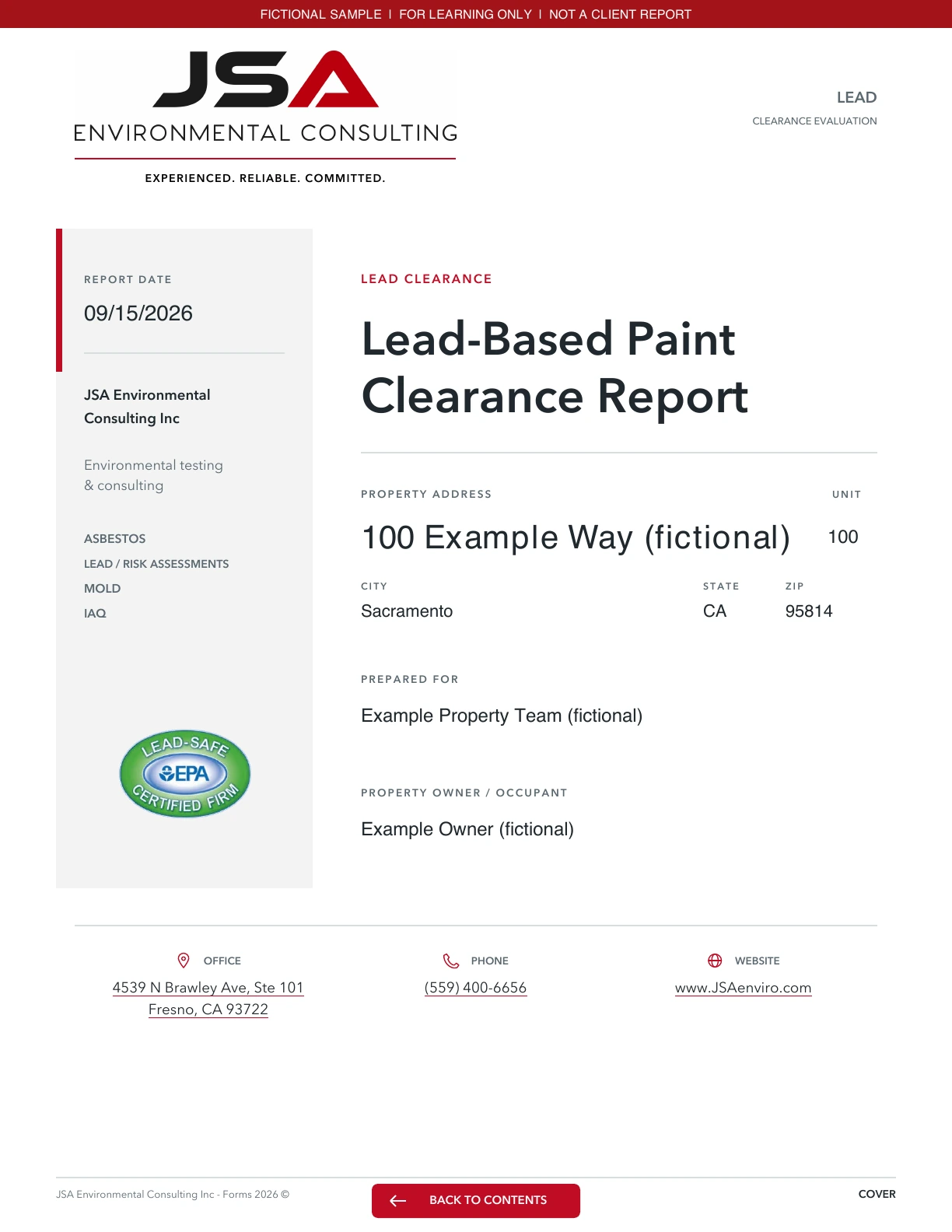
FICTIONAL SAMPLE — FOR LEARNING ONLY. These are selected pages from JSA’s actual template, filled with invented details. No inspection signatures or professional certification numbers are included. This is not a client report or authorization to begin work.
Read the report in context
What to look for, and why it matters.
Locate the documented work area, report status, and dust-sample result in a JSA clearance report.
- Confirm the assignment.Match the property, date, requested work, and areas included. Check the limitations before applying the findings to another room or a different project.
- Connect results to locations.Follow the sample or reading identifiers through the location records, result tables, and supporting laboratory documents. Keep units and methods with the results.
- Read the next steps.Review recommendations and any pending items. A sample excerpt does not replace the full report, attachments, or project-specific professional judgment.
Explore the report
Choose a page. Explore the details.
Select a numbered explanation to highlight its field. Page labels match the codes printed in the report footer. Explanations restart at 1 on each page; these excerpts skip pages from the complete report.
Have a report you’d like to discuss?
Share the complete report and its attachments with JSA so we can review the findings in context.
Further reading: EPA lead inspections and risk assessments. Source reviewed September 20, 2026. These examples explain the report layout; they do not establish a sampling plan or the requirements for a particular property.